
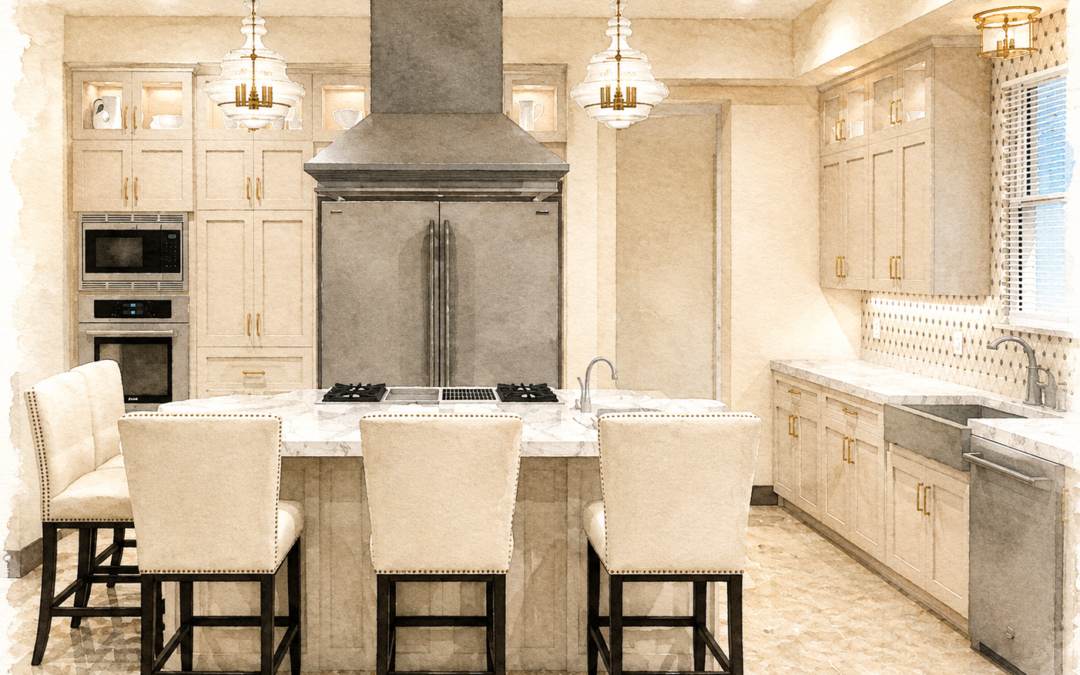
Your remodel can start easily enough. You save a kitchen you love on Pinterest. Next, you go to the store and find the perfect tile and start looking at countertops. Then lighting and cabinet colors. Before long, you’re making design decisions that affect the look and feel of your entire home. Now you’re spending real money without being completely sure the decisions you make before you start your remodel are in the right order.
That’s when remodeling can quickly go from exciting to overwhelming.
Before you start choosing finishes or approving construction plans, there are a few bigger decisions worth making first. Because the goal isn’t simply to create a beautiful home. It’s to make thoughtful choices you’ll feel confident about long after the project is finished.
1. Decide How You Want Your Home to Feel
Before deciding what your home should look like, think about how you want it to feel.
- Calm and restorative?
- Warm and welcoming?
- Light and relaxed?
- Refined but comfortable?
This may sound less important than choosing countertops or flooring, but it’s one of the decisions that can guide everything that follows. When you know how you want to feel in your home, it becomes easier to evaluate colors, materials, furnishings, lighting, and even the way a room functions.
Instead of asking only, “Do I like this?” You can also ask, “Does this support the way I want to live and feel here?” That’s a much better filter.
2. Get Clear About What's Not Working
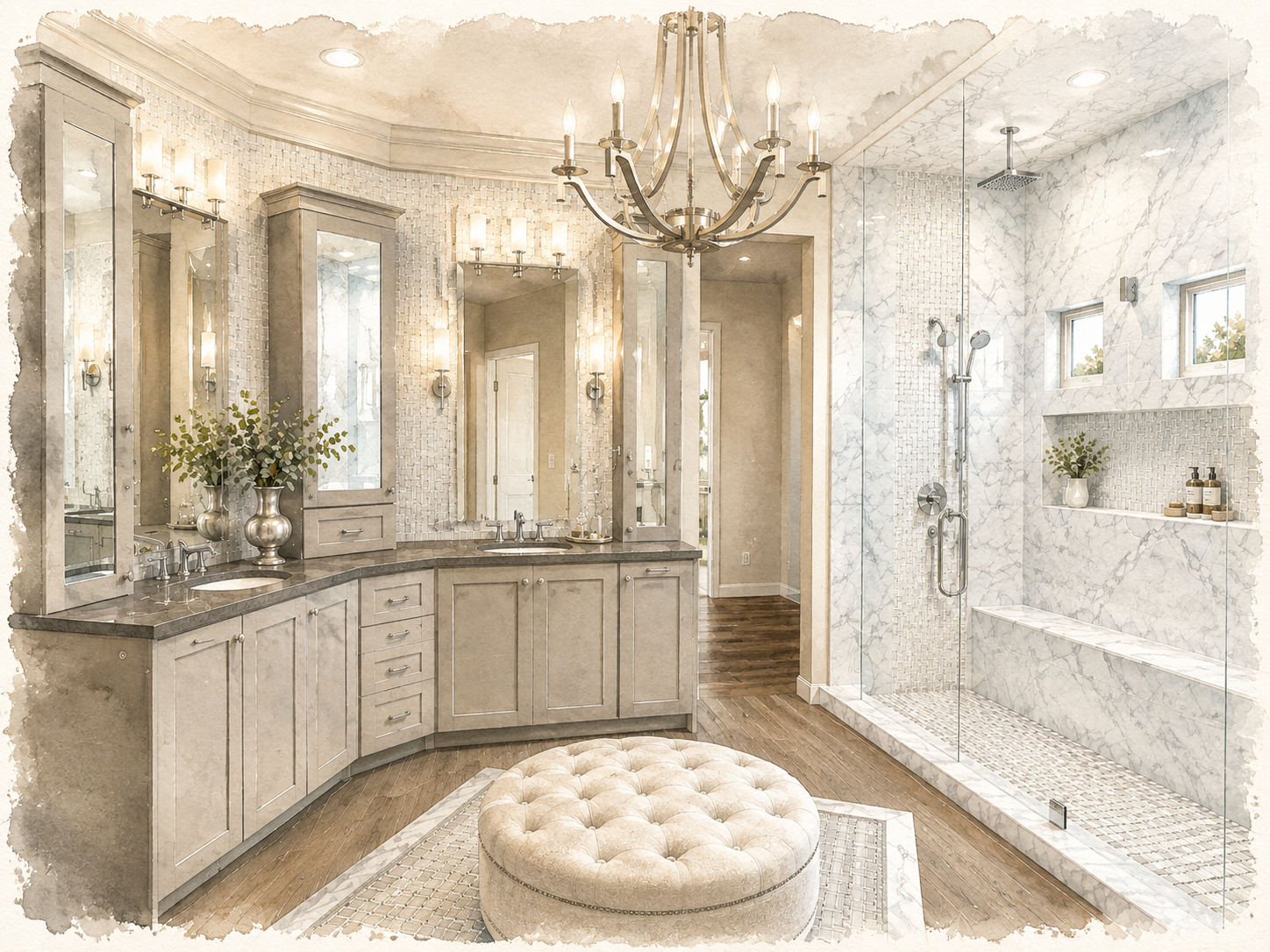
Original interior design and 3D rendering by Diva by Design | Watercolor treatment created using AI
It’s easy to begin a remodel with a list of things you want to change. But before deciding what needs to be new, take a closer look at why the existing space isn’t working. Maybe your kitchen isn’t simply dated. It could be that the real problem is everyone gathers in one congested area.
Maybe the primary bathroom isn’t only unattractive. The storage doesn’t work, there’s not enough lighting, or the shower feels cramped.
Maybe your living room doesn’t need all new furniture. The problem could be scale, placement, or pieces that were purchased at different times and never quite came together.
Identifying the real problem helps you invest in changes that improve the way you live. Not simply changes that make everything look newer.
3. Decide What Matters Most
Most projects involve competing priorities. You may want better storage, new flooring, updated lighting, a larger kitchen island, custom cabinetry, beautiful countertops, or new furniture. Then there might be a few things you haven’t even thought of yet. Trying to give every decision equal importance can make the project unnecessarily expensive and exhausting.
Instead, determine your priorities. Ask yourself:
- What would make the biggest difference in our daily life?
- Which problems need to be solved now?
- What are we unwilling to compromise on?
- What would be nice to have but isn’t essential?
- What could reasonably wait for another phase?
Clear priorities make your later decisions much easier. They also help you recognize where it’s worth investing more. Also, where you may be perfectly happy keeping things simpler.
4. Establish a Realistic Investment Range
This is one of the most important conversations to have before you begin shopping. Your investment range isn’t simply a spending limit. It helps determine what’s realistic for the project and where your money can have the greatest impact.
A thoughtful investment conversation considers more than the total number. It asks:
- Which changes will make the greatest difference?
- Which materials or features are worth investing more in?
- Where does quality matter most?
- Where can we simplify without compromising the overall result?
- Are we allowing enough for the details that make the home feel finished?
You don’t need to choose the most expensive option at every turn. In fact, good design rarely requires that. Investing wisely means knowing where quality matters, where you can be more practical, and which choices are worth making well.
5. Understand the Order of Your Decisions
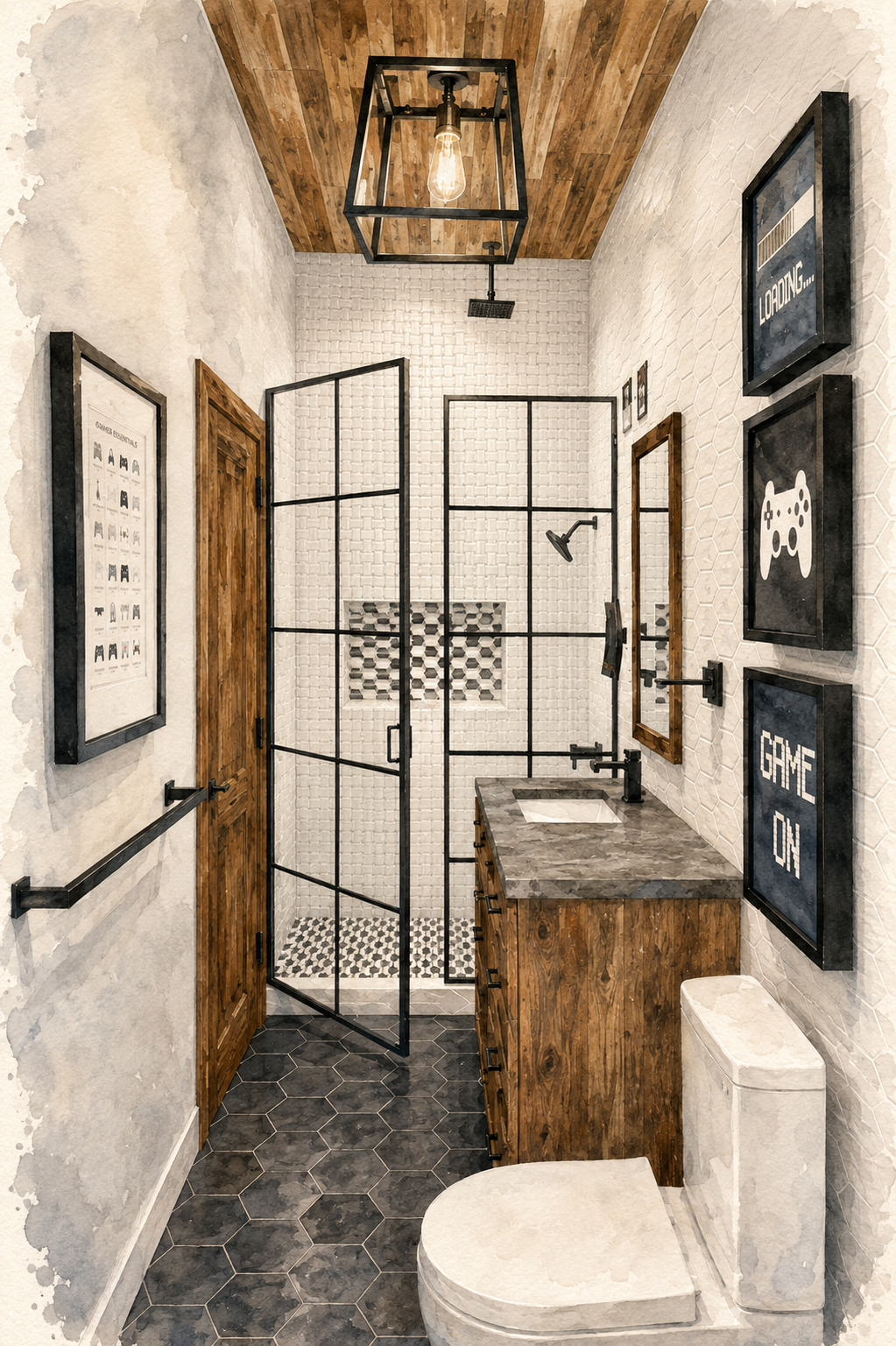
Original interior design and 3D rendering by Diva by Design | Watercolor treatment created using AI
One of the easiest ways to make a remodel harder is to choose things independently. You fall in love with a tile. Then you find a countertop. Next you choose flooring. Now you’re trying to find a cabinet color that somehow connects all three. Each decision begins limiting the next.
A better approach is to establish the larger design direction first and make selections in an intentional order. Permanent and visually dominant choices generally need consideration before smaller, easier-to-change details. The exact sequence will depend on your project, but the principle remains the same:
Don’t make today’s decision without considering what it affects tomorrow. When decisions begin stacking up, even an exciting remodel can become mentally exhausting. I wrote more about why this happens in Why Decision Fatigue Is the Real Reason Your Remodel Feels Overwhelming.
This is one of the places where professional design guidance can be particularly valuable. An experienced designer isn’t looking at one selection in isolation. We’re thinking several decisions ahead.
6. Create a Clear Design Direction Before You Shop
Pinterest is perfect for discovering what catches your eye. It’s less useful when you’ve saved a modern organic kitchen, a colorful English-inspired powder room, a coastal living room, and a dramatic hotel bathroom and love all four.
That’s not unusual. Most people are drawn to more than one look. The challenge is translating what you love into a direction that makes sense for your home, your architecture, and the way you live.
Before shopping, identify the recurring elements in what you’re saving. Maybe it’s:
- Warm wood
- Natural stone
- Soft, earthy color
- Clean lines
- Vintage details
- Strong contrast
- Comfortable upholstery
- A sense of simplicity without feeling stark
You don’t necessarily need a label for your style. What matters more is creating a direction that feels right for your home and the way you live. You don’t have to simply follow what happens to be popular right now.
If you’re thinking about longevity as you make those choices, you may also enjoy Timeless Interior Design Ideas That Won’t Go Out of Style. You need enough clarity to recognize when something belongs and when it doesn’t.
7. Build the Plan Before Construction Begins
Once construction starts, decisions tend to come quickly. The contractor needed an answer yesterday. Something is backordered or an allowance doesn’t cover what you expected. A selection changes, which affects another selection.
That’s not the ideal time to begin figuring out what you want.
The more of these decisions you make before you start your remodel: your priorities, investment range, design direction, major selections, and decision sequence, the easier it becomes to respond when the unexpected happens.
A plan doesn’t eliminate every surprise. It gives you something to come back to when surprises occur. And that changes the experience from constantly reacting to moving forward with clarity.
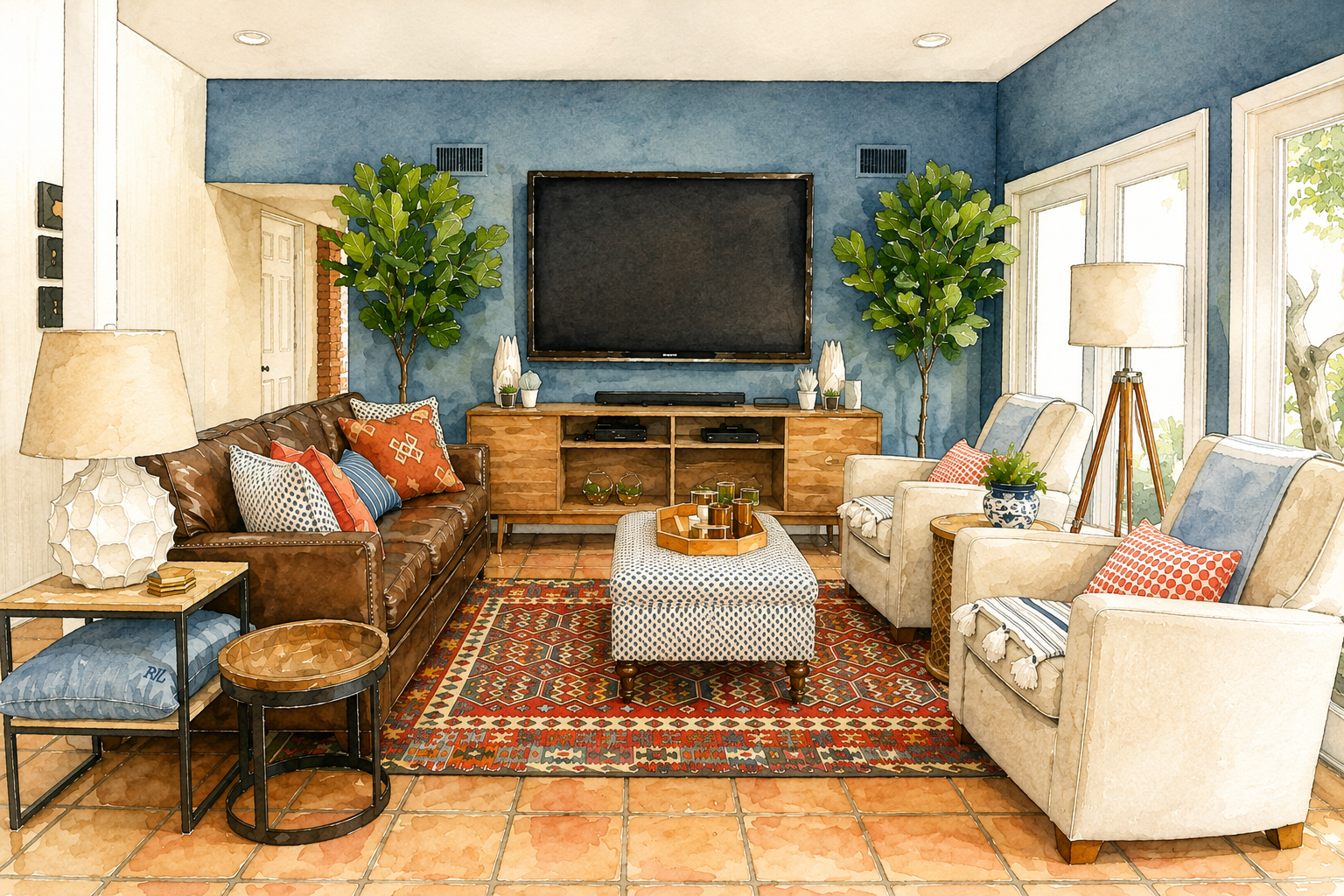
Designed in Harlingen, Texas in 2018, this living room shows how thoughtful choices, classic furnishings and personal details can continue to feel relevant years later. Original interior design by Diva by Design | Project photograph transformed into watercolor artwork using AI
Before You Spend, Step Back and Look at the Whole Project
The most expensive design mistake isn’t always choosing the wrong countertop or ordering the wrong sofa. Sometimes it’s beginning to spend before you have enough clarity about where you’re going. A successful remodel isn’t created by making hundreds of perfect individual choices.
It’s created by understanding which decisions matter, making them in the right order, and knowing how each choice supports the home you ultimately want to live in. That’s the thinking behind Before You Spend. Before you order. Before you approve. Before you commit.
Make sure each decision moves you toward the home you want.

Planning a Remodel? Start Here.
If you’re thinking about remodeling, I’ve created Planning a Remodel? Start Here to help you think through the important decisions before construction begins.
You’ll walk through seven essential steps, identifying how you want your home to feel and establishing your priorities to thinking about investment, selections, and the plan that brings it all together.
Click the title to get Planning a Remodel? Start Here
And if you’d like professional guidance for your project, explore The Design Experience to see the ways Diva by Design can help you move from uncertainty to clear, confident decisions.
Diva by Design serves homeowners in League City, Friendswood, Clear Lake, Galveston, and the surrounding Houston Bay Area.
© Diva by Design 2026. All Rights Reserved.