
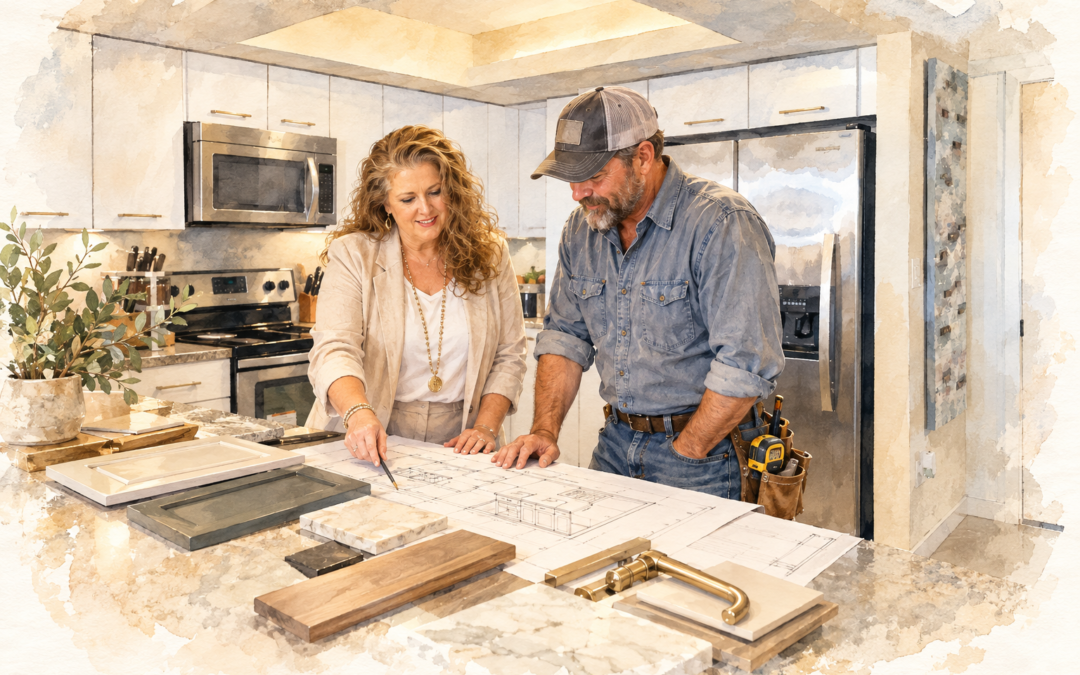
AI-generated watercolor of Christina Rodriguez of Diva by Design in a client kitchen she re-designed
When you’re planning a remodel, you might assume the first person you need to call is a contractor. After all, the contractor is the one who will build it. However, who decides what should be built?
Who determines how the new rooms will function, what the cabinetry will look like, where lighting should go, how the materials work together, or whether all those ideas you’ve been saving will actually work in your home?
That’s where your interior designer comes in.
Interior designers and contractors play different roles in a remodeling project. Understanding those roles before construction begins can make the entire process easier and help you assemble the right team for your project.
What Does a Contractor Do During a Remodel?
Your contractor is responsible for bringing the design into physical reality.
Depending on the project, that may include coordinating trades, scheduling construction, ordering materials, addressing site conditions, obtaining permits, managing demolition and installation, and determining the appropriate construction methods.
A good contractor brings valuable knowledge about how something should be built. That is different from deciding what should be built and how the finished room should function and look.
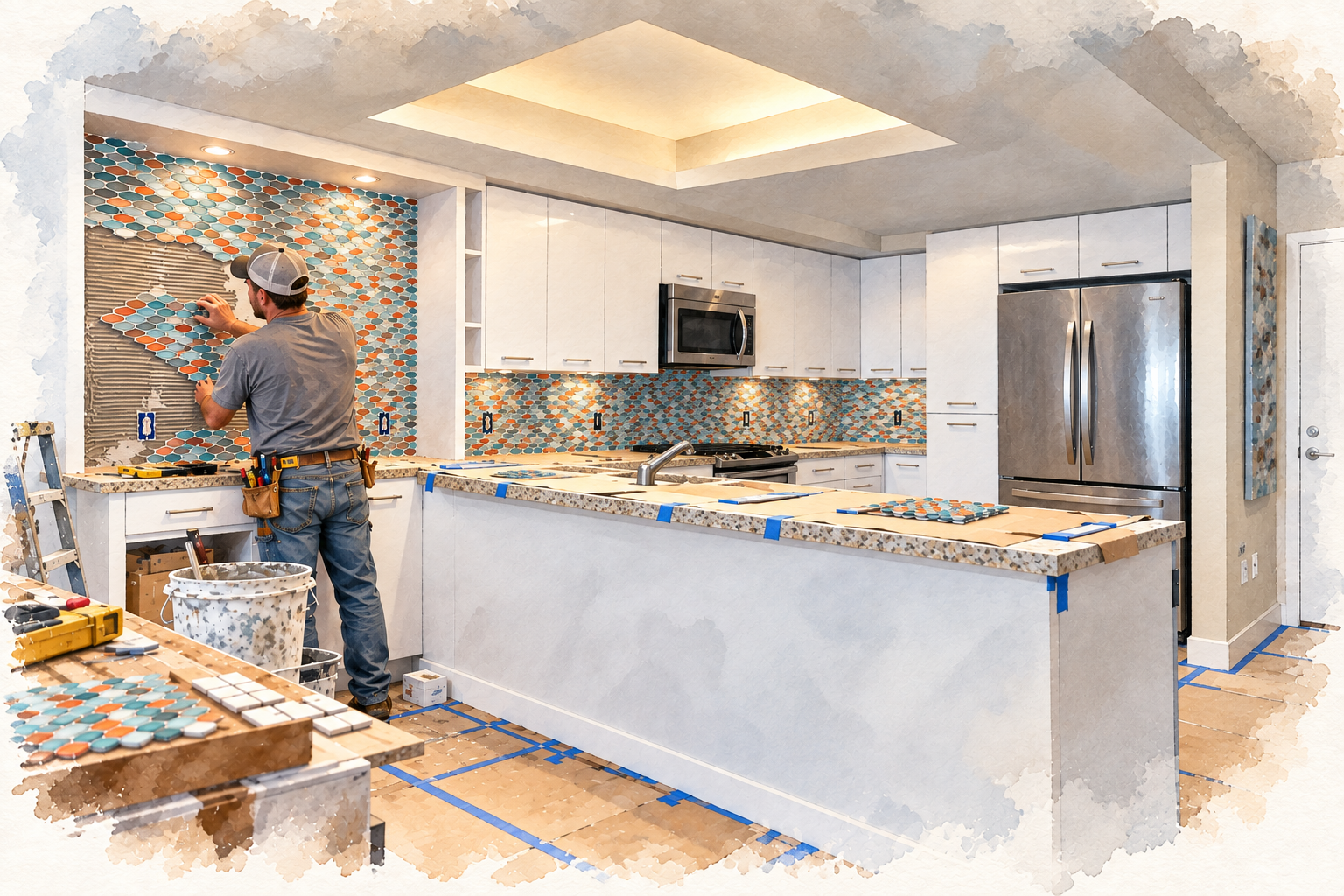
AI-generated watercolor based on a Diva by Design kitchen rendering, showing a contractor bringing the design to life during installation
What Does an Interior Designer Do During a Remodel?
This is where there can be a lot of confusion. Interior design during a remodel is not simply choosing paint colors, tile and pretty light fixtures after the construction decisions have already been made. An interior designer can help design the space itself.
Depending on the scope of your project, that might include:
- Space planning and furniture placement
- Cabinetry and built-ins
- Kitchen and bathroom layouts
- Lighting placement
- Fireplace design
- Vanity configurations
- Storage solutions
- Architectural and decorative details
- Flooring, countertops and tile
- Plumbing and lighting fixtures
- Hardware and paint colors
And those decisions aren’t made independently. The dimensions of a shower affect the tile layout. Cabinetry affects lighting and hardware placement. The vanity design affects plumbing, mirrors, sconces and storage. Flooring and countertop selections influence the other materials and colors in the room.
An interior designer looks at those relationships as part of one complete design.
Can't My Contractor Help Me Choose Everything?
Some contractors are happy to offer opinions or send homeowners to their preferred showrooms and suppliers. That can certainly be helpful. Choosing what looks good together isn’t necessarily the contractor’s role or area of expertise.
Your contractor is looking at the project through the lens of construction: Can it be built? How should it be installed? What will it cost? Which trade needs to do it? When does it need to happen?
Your interior designer is looking at the project through another lens: How should this function? How should it feel? Are the proportions right? Does this choice work with everything else we’re planning? Will the finished space feel cohesive?
Those perspectives complement each other.

AI-generated image of Christina Rodriguez of Diva by Design reviewing materials and design selections for a client project
Should I Hire an Interior Designer or Contractor First?
For many remodels, it makes sense to involve your interior designer before construction begins. That doesn’t necessarily mean you need to have a designer hired months before speaking with contractors. It means you don’t want to wait until demolition has started and your contractor suddenly needs a series of design decisions.
Early in the process, your designer can help establish the design direction, work through layouts and details, and determine the finishes and fixtures the project will require.
Some contractors also expect homeowners to purchase materials before construction begins. That means flooring, tile, plumbing fixtures, lighting and other materials may need to be selected and ordered well before the first day of work. Depending on the services your interior designer offers, they may also be able to handle purchasing and procurement for you.
At Diva by Design, purchasing and procurement can be included as part of the design services, allowing you to hand off much of the ordering and coordination rather than managing it yourself. This can take another layer of responsibility off your plate while helping ensure the correct materials, quantities and specifications are ordered for the project.
That also gives your contractor better information to work with when planning and pricing the project. If you already have a contractor, that doesn’t mean you’ve missed your opportunity to hire a designer. A designer can work alongside the contractor as the design develops.
Why Do the Designer and Contractor Need to Work Together?
A remodel has a lot of moving pieces. Something that appears to be a simple design decision can affect construction, and site conditions can require design adjustment. That’s why communication between the designer and contractor matters.
For example, I may design a particular cabinetry configuration or tile layout. The contractor may uncover a site condition during construction that affects how that detail can be executed. We can then determine how to address the condition without losing the intention of the design.
The goal isn’t for the designer to tell the contractor how to build or for the contractor to become the designer. It’s for each professional to bring their expertise to the project.
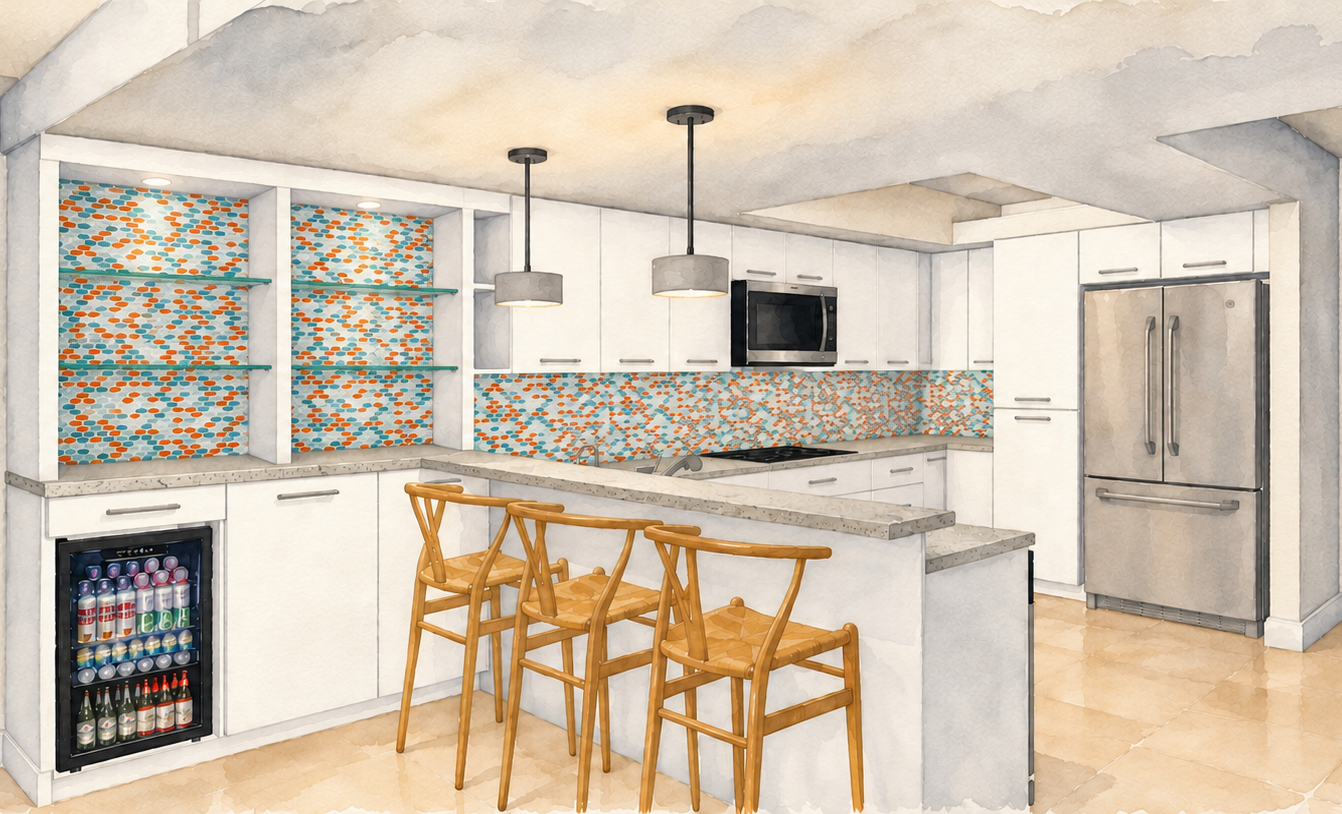
AI-generated rendering of a Mid Century kitchen remodel designed by Christina Rodriguez of Diva by Design
Do I Need an Interior Designer for Every Remodel?
Not necessarily.
If you’re replacing a few items with very similar products and aren’t changing the function, layout or overall design of the space, you may be perfectly comfortable working directly with a contractor.
An interior designer can be especially valuable when:
- You’re changing the layout or function of a space.
- You’re remodeling a kitchen or bathroom with many interconnected decisions.
- You’re making substantial cabinetry, lighting or material changes.
- You want the remodeled areas to feel cohesive with the rest of your home.
- You’re overwhelmed by the number of decisions.
- You know what you like individually but aren’t sure how to make everything work together.
- You want someone thinking about the finished space while your contractor concentrates on building it.
And hiring a designer doesn’t automatically mean hiring someone for full-service interior design.
What If I Only Need Help with Certain Decisions?
This is one of the reasons I offer different levels of interior design help at Diva by Design. Some homeowners need someone to design and manage the entire interior project. Others already have a contractor and simply need professional help making important design decisions.
You might need help developing the design for a particular area. You may want someone to work through a handful of decisions with you. Or you may need help selecting and coordinating the finishes and fixtures throughout your remodel.
The right level of design help depends on your project and how much of the process you want to manage yourself.
Interior Designer or Contractor? For Many Remodels, the Answer Is Both.
A contractor and an interior designer aren’t interchangeable. Your contractor brings the construction expertise needed to build the project. Your interior designer brings the design expertise needed to determine what you’re building and how all of the pieces should work together.
When both are involved at the right time, your contractor can concentrate on executing the project while your designer keeps the function, details and overall vision of the finished home in view.

If you’re planning a remodel in League City, Galveston or the Greater Houston Bay Area and aren’t sure what kind of design help you need, Diva by Design offers several ways to get professional guidance, from focused design help and Finishes & Fixtures selections to more comprehensive interior design services.
Planning to manage your remodel yourself?
Rock Your Remodel walks you through the decisions and details to consider before construction begins.