
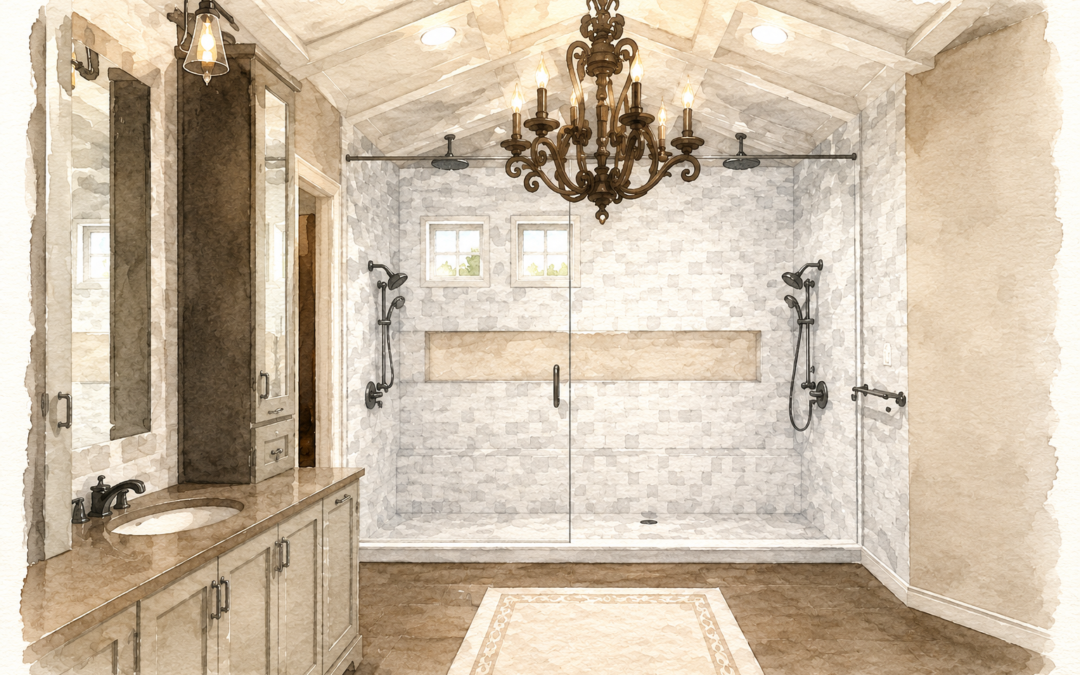
Figuring out how to make a room feel finished can be frustrating when you’ve already chosen beautiful things and something still feels wrong. You may already have the furniture, the rug, the artwork, and most of the accessories. You’ve chosen things you genuinely like, and nothing is technically “wrong.” But when you look at the room, something still feels unfinished.
This is usually when you start questioning your choices. Maybe the sofa was the wrong choice. Maybe the rug needs to be replaced. You wonder if you need different artwork or more accessories. Before long, you’re shopping again, hoping the next thing you bring home will finally make the room work.
Most of the time, the problem isn’t that you’ve made bad choices or that you don’t have good taste. The problem is that the individual pieces aren’t quite working together yet.
A room begins to feel complete when the furniture, color, lighting, texture, scale, and accessories all relate to one another. When they don’t, even beautiful pieces can feel disconnected. This is why a room can look “done” on paper but still feel unfinished in real life.
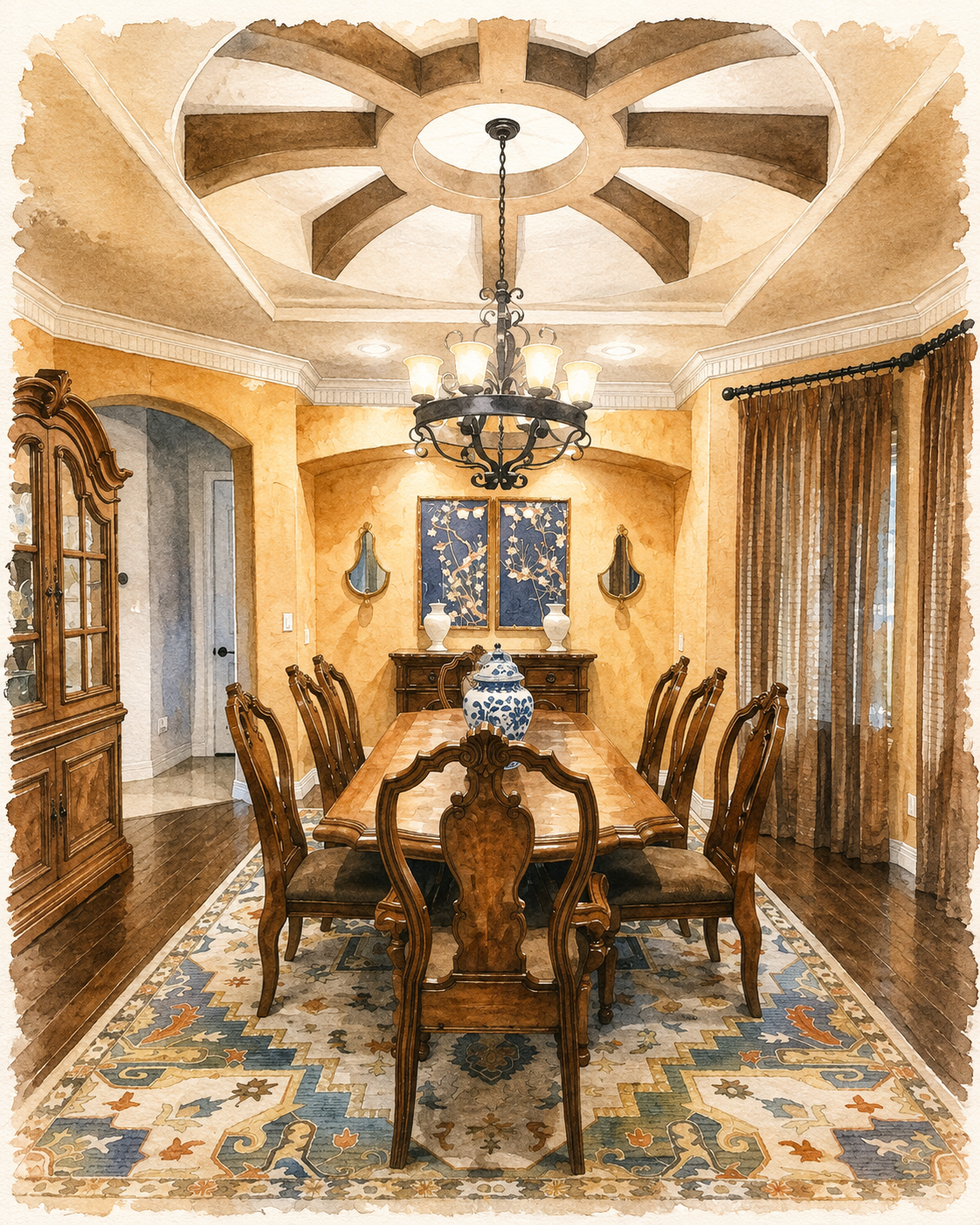
A fresh perspective on one of our completed client rooms. This AI-generated watercolor was created from the original project photography.
The Scale and Proportion May Be Off
Scale and proportion are two things you may not immediately notice when you walk into a room, but you can usually feel when they’re wrong. The rug may be too small for the furniture arrangement. Your lamps may be too large for the end tables. The artwork may not fill enough of the wall, or you may have several smaller pieces of furniture when the room really needs one larger piece to anchor it.
None of these things are necessarily unattractive on their own. They simply may not be the right size or proportion for everything else in the room. This is also why buying something you loved in a showroom or saw online doesn’t always work once you bring it home. You’re no longer looking at that piece by itself. You’re looking at how it relates to everything around it.
When the scale and proportion are right, the room feels more balanced. You may not be able to explain exactly why it looks better. It just does.
Everything May Match a Little Too Well
We spend a lot of time trying to make sure everything in a room goes together. Sometimes we take that a little too far.
If the furniture matches, the colors are very similar, and all the finishes and textures feel the same, the room can start to feel flat. Everything coordinates, but there isn’t enough contrast or variation to make the room interesting. This is where layering becomes important.
Mixing smooth and textured surfaces, lighter and darker tones, different materials, and even old and new pieces gives a room depth. You might add a woven basket next to a smooth wood cabinet, introduce a patterned pillow on a solid sofa, or place something vintage beside something new.
You still want the room to feel connected. You just don’t want it to look like everything came from the same furniture showroom on the same day.
The Lighting May Be Working Against You
Lighting can completely change the way a room feels. You can have beautiful furniture, finishes, and accessories, but if you’re relying mostly on overhead lighting, the room may still feel flat or even a little cold, especially in the evening.
Most rooms benefit from several sources of light. Table lamps, floor lamps, sconces, picture lights, and accent lighting create layers and give you more control over how the room feels throughout the day. This is where I come back to a question I ask often when I’m designing a space:
How do you want this room to feel?
The lighting should support that feeling as much as the furniture, color, or anything else you choose.
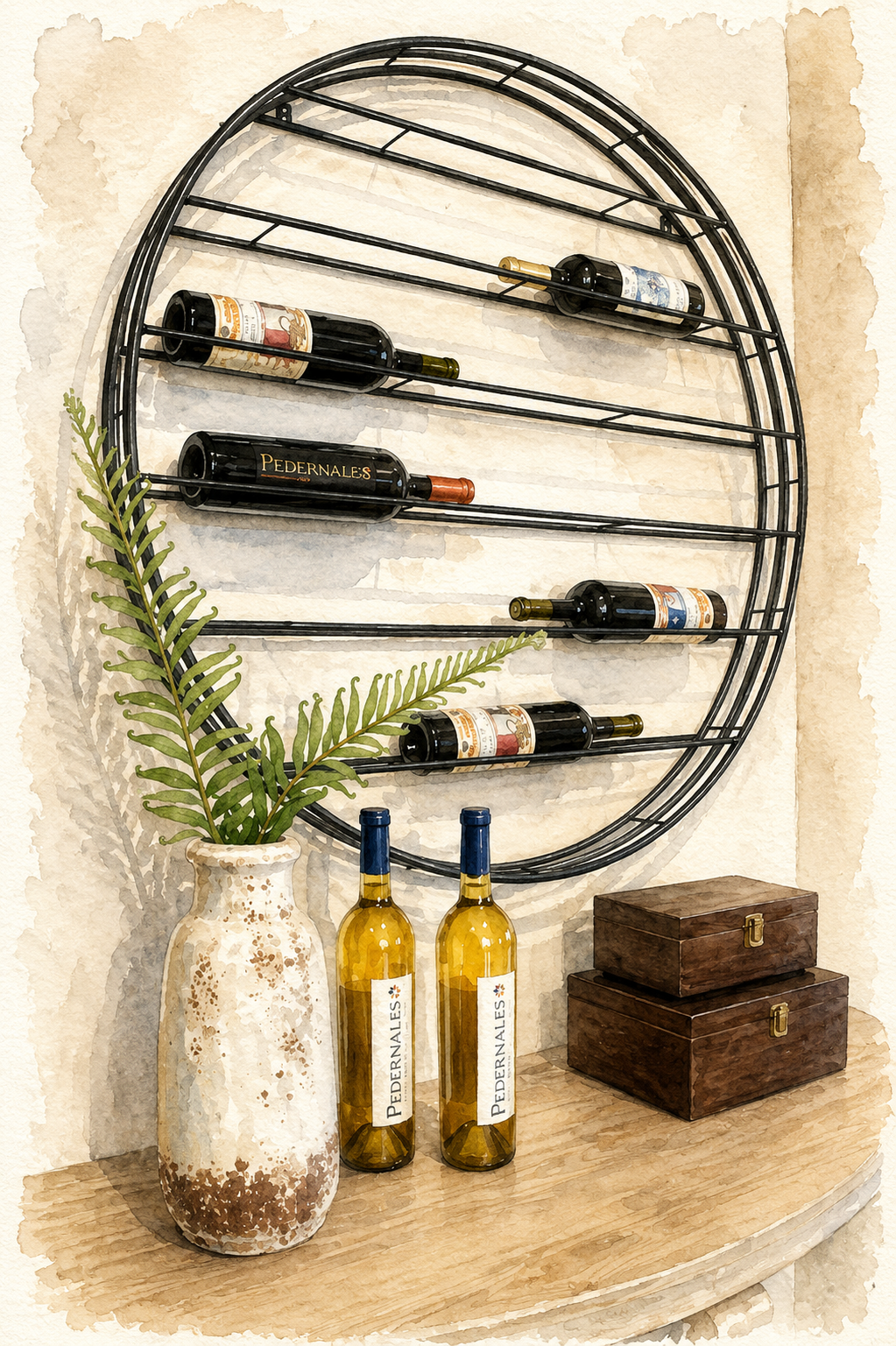
A fresh perspective on one of our completed client homes. This AI-generated watercolor was created from the original project photography. Explore the project →
Your Home Needs Some of You in It
Sometimes a room looks beautiful but still doesn’t feel like home because there’s nothing personal about it. It’s easy to save inspiration photos and try to recreate a room you love. There is nothing wrong with using those rooms for inspiration, but the room in that photograph was designed for someone else’s life.
Your home should tell some of your story.
That may be family photographs, books you actually read, something you found while traveling, artwork you love, a piece you inherited, or something you’ve owned for years and can’t imagine getting rid of.
Not everything in your home needs to be new or perfectly coordinated. In fact, some of the things that make a room feel the most interesting are the things that mean something to you. Those are the details that begin to make a beautiful room feel like your home.
You May Be Adding When You Really Need to Edit
When a room doesn’t feel finished, our first instinct is often to buy something else. You think, “Maybe another pillow will help”. Or, “I need something for the coffee table”. Then you say, “Maybe the wall needs another piece of art”.
Before long, you’ve spent quite a bit of money, and the room still doesn’t feel right. Sometimes the problem isn’t that the room needs more. It may need less. Something may need to move, or you may already have all the right pieces but they’re not being used in the best way.
Learning how to make a room feel finished often has as much to do with editing what you already have as adding something new. Sometimes you simply need another set of eyes. When you’ve been looking at the same room every day, it becomes difficult to see it objectively. A designer can look at the entire room and often identify what is creating the imbalance much more quickly.
That might mean adding something, but it can just as easily mean removing something, changing the placement, adjusting the scale, or working differently with what you already own.
How to Make a Room Feel Finished Without Starting Over
If you’ve been looking around your home thinking something isn’t right, don’t assume that means you need a new sofa, a different dining table, or an entirely new design. You may already have most of what you need. Sometimes a room simply needs editing, better placement, a few missing layers, or the right finishing pieces to bring everything together.
And knowing the difference can save you from continuing to spend money on things that never actually solve the problem. A finished room doesn’t mean every wall needs something on it or every surface needs to be filled with accessories. It means the room feels just right.
The furniture feels balanced and the lighting works. The colors and materials you chose relate to one another. There are enough layers to make the room interesting and enough personal elements to make it feel like your home.
Most importantly, you aren’t constantly looking around wondering what else you need to buy or what you should change. You can simply enjoy the room. That’s the difference between a room that has been decorated and one that feels complete.

If your room is almost there but you can’t figure out what’s missing, you don’t necessarily need to start over. This is exactly why I created The Finishing Touch.
We’ll look at what you already have, determine what’s keeping the room from feeling complete, and create a plan for what needs to be added, removed, moved, or changed.
Instead of continuing to buy things and hoping something finally works, you’ll know what your room needs. You can move forward with confidence and finally enjoy the home you’ve worked so hard to create. Click the title to learn more about The Finishing Touch.
Because a peaceful home isn’t created by accident. It’s designed with intention.
Based in League City, I work with homeowners throughout Clear Lake, Friendswood, Galveston, and the surrounding Bay Area who want beautiful homes that feel personal, comfortable, and complete.