
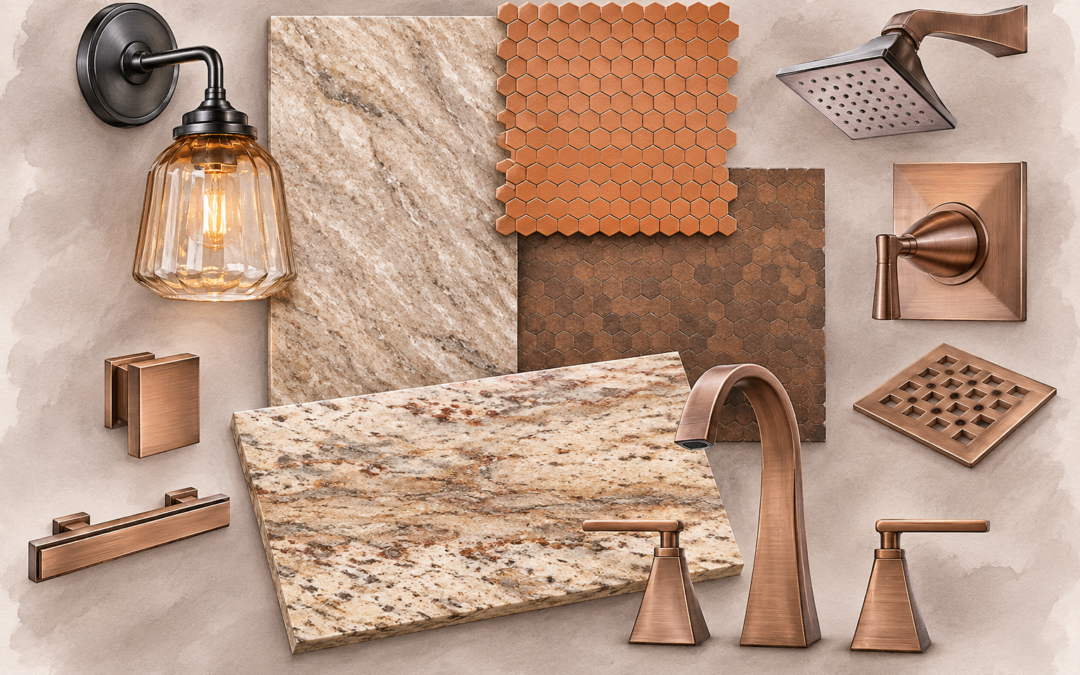
Remodeling your home should be exciting. However, once you start looking at flooring, cabinets, countertops, tile, paint colors, lighting, and hardware, it’s easy to feel overwhelmed by all the choices.
You might fall in love with a beautiful countertop, find the perfect tile, and choose a cabinet color you adore. However, many homeowners don’t realize that even though each selection is beautiful, it doesn’t mean they’ll look good together. Every material you choose affects the next decision.
When selections are made in the wrong order, you can end up with finishes that compete rather than complement one another. The secret isn’t having more choices. It’s knowing which decisions to make first.
After more than 16 years of designing homes, I’ve developed a process for selecting remodeling materials that will help you create a beautiful, balanced home without a lot of confusion.
Here’s the order I follow:
1. Start With the Overall Remodeling Plan
Before choosing a single material, you need to know what you’re working with. Are you keeping the existing layout or changing it? Will walls be removed? Are you replacing everything or incorporating some of the home’s existing finishes?
These decisions establish the direction of your project.
It’s also important to consider how the remodeled space relates to the rest of your home. Your kitchen or bathroom might be the focus of your renovation, yet it doesn’t exist independently of the rooms around it.
Unless you are planning to remodel your entire house, a successful remodel should feel like it belongs with the rest of your home. An interior designer can keep it from looking like an entirely different house was dropped into the middle of it.
2. Choose Your Cabinet Style and Configuration
If your remodel includes cabinetry, start by deciding on the style and configuration before selecting the color. Do you prefer traditional raised-panel doors, classic Shaker cabinetry, or a sleek, contemporary slab style?
Your cabinetry establishes much of the architectural character of the room. Door style, proportions, and configuration influence which other materials you will choose. This is also when appliance requirements become important, particularly in a kitchen. Appliance sizes and specifications affect cabinet dimensions, clearances, and the overall layout.
You don’t have to decide on the cabinet color yet. That comes after the flooring.
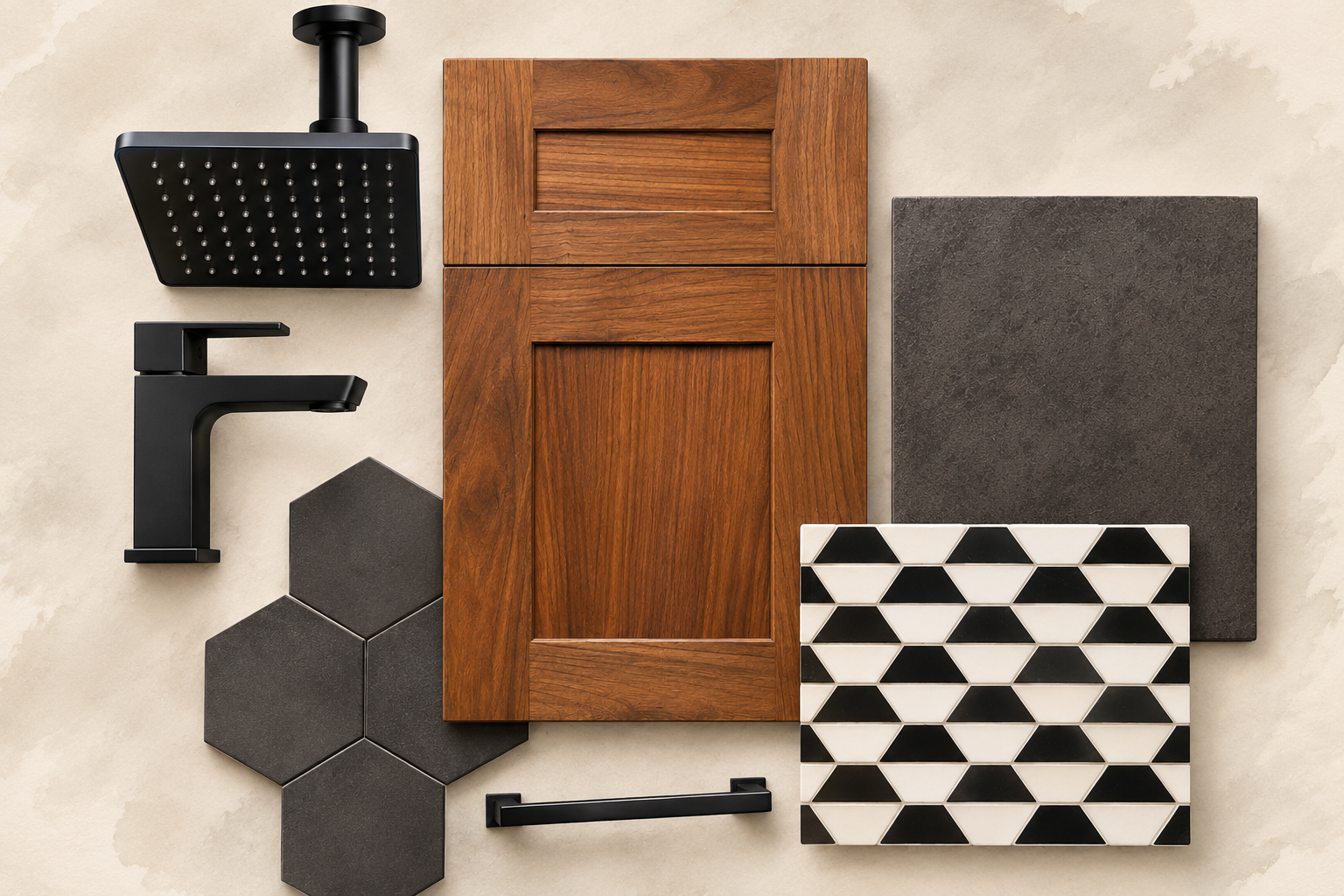
Materials chosen by Diva by Design for a boys’ bathroom remodel project (image generated from project images using AI)
3. Choose Your Flooring
Flooring is one of the largest visual surfaces in your home, and it has a significant influence on everything else you select.
When I was looking to buy my house, I walked through one that had four different types and colors of tile flooring. Because none of them looked good together, the transitions from room to room made no sense. I didn’t buy that house.
That experience illustrates something important about remodeling: the choices you make in one room affect how the entire home feels.
Before selecting new flooring, consider what’s already in adjoining rooms. Will the new material continue into other spaces? Will you be introducing a transition between different types of flooring?
Different flooring materials can work beautifully within the same home, but they need to feel intentional. Flooring is also a substantial investment and isn’t something most homeowners want to replace because another finish doesn’t work with it. That’s why I establish the flooring direction before choosing cabinet colors.
4. Choose Your Cabinet Color
Now that you know your cabinet style and flooring direction, it’s time to consider the cabinet finish. Cabinets take up a significant amount of visual space, particularly in kitchens and bathrooms. Their color or wood finish needs to work with the flooring rather than compete with it.
A cabinet color that looks beautiful in a showroom may feel entirely different when placed next to the flooring in your home. And if you’re keeping some existing materials, those finishes need to be part of the decision.
The goal isn’t necessarily to make everything match. In fact, a room where everything matches too closely can feel flat. The goal is balance.
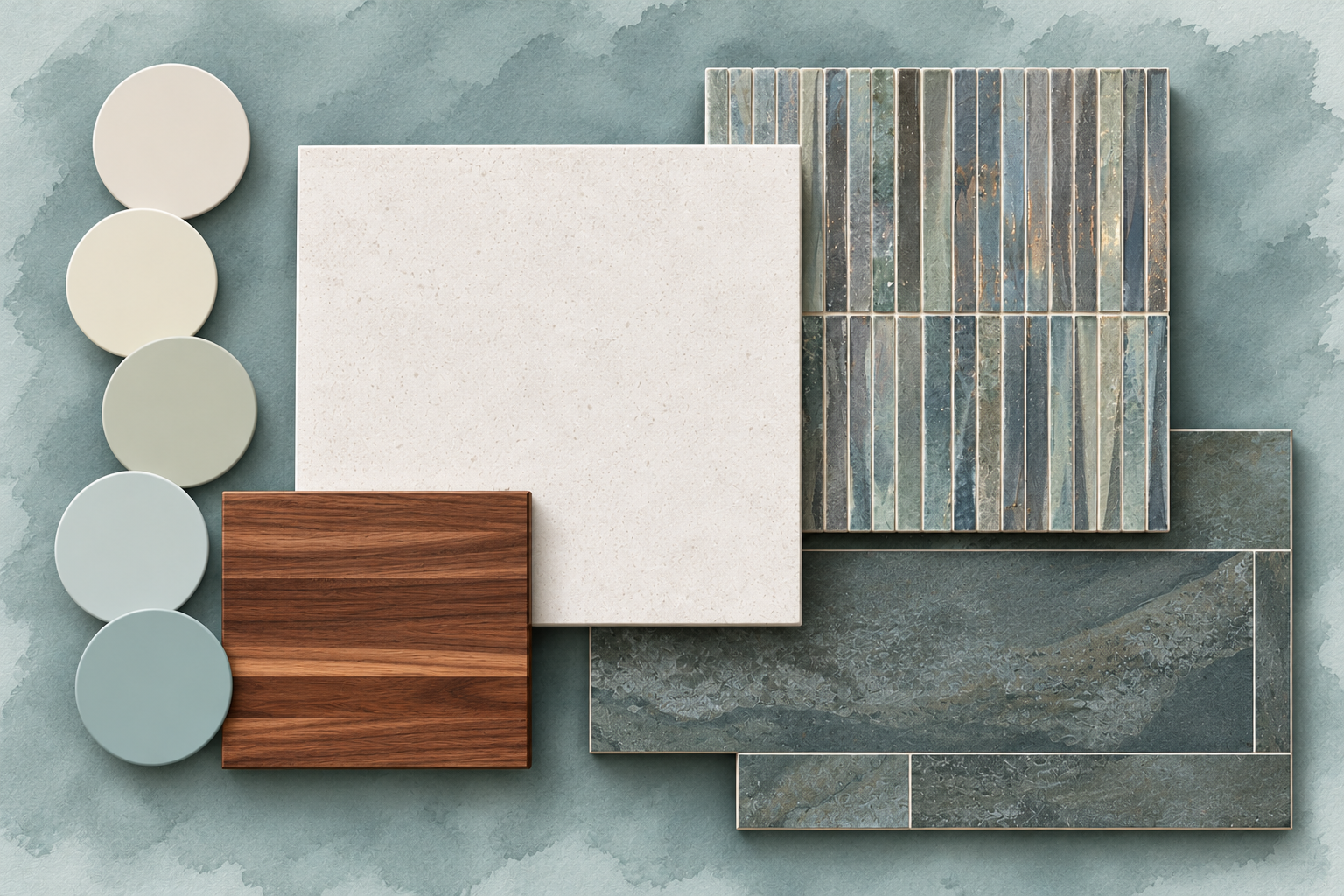
Materials chosen for a beach condo kitchen remodel project by Diva by Design (image created from photos of actual materials using AI)
5. Choose Countertops and Tile
This is where homeowners often get into trouble. There are so many beautiful countertop materials and tile options available that it’s tempting to choose each one based on how much you love it individually.
However, a dramatic countertop, patterned backsplash, and heavily textured flooring can all compete for attention. The relationship between these materials matters just as much as their individual appearance.
Consider the colors, patterns, and overall visual weight of your selections. Natural stone, porcelain, ceramic tile, and other materials each bring their own character to a room. Some materials should take center stage, while others provide a supporting role.
This is also where professional guidance can make a tremendous difference. An experienced designer understands how to evaluate the materials together and create a balanced result.
6. Choose Your Wall Paint Colors
One of the most common mistakes homeowners make is choosing paint colors too early. It’s easy to fall in love with a paint color and then spend the rest of the remodeling process trying to find flooring, cabinets, countertops, and tile that work with it.
I prefer to reverse that process.
Once the major materials have been selected, the wall color can be chosen to complement them. Paint offers an enormous range of possibilities, making it much easier to find a color that works with your permanent finishes than to work backward from a paint color.
And remember, the same paint color can look different depending on the natural light, artificial lighting, and surrounding materials. Paint should help bring the room together, not become another competing element.
7. Select Lighting, Plumbing Fixtures, and Hardware
Now it’s time to consider the details that help complete the design. Lighting, faucets, cabinet hardware, and other fixtures may seem like finishing touches, but they have a substantial influence on the character of a room.
A traditional faucet can change the feeling of a bathroom just as easily as contemporary cabinet hardware can influence the appearance of a kitchen. The important thing is to select pieces that support the overall design rather than treating each purchase as an unrelated decision. There’s also a practical distinction worth understanding.
Although I coordinate the decorative appearance of these selections at this stage, some fixture specifications and locations must be determined much earlier so your contractor can plan plumbing, electrical work, and installation requirements. This is why I suggest getting the layout done first.
The design selection process and construction schedule need to work together.
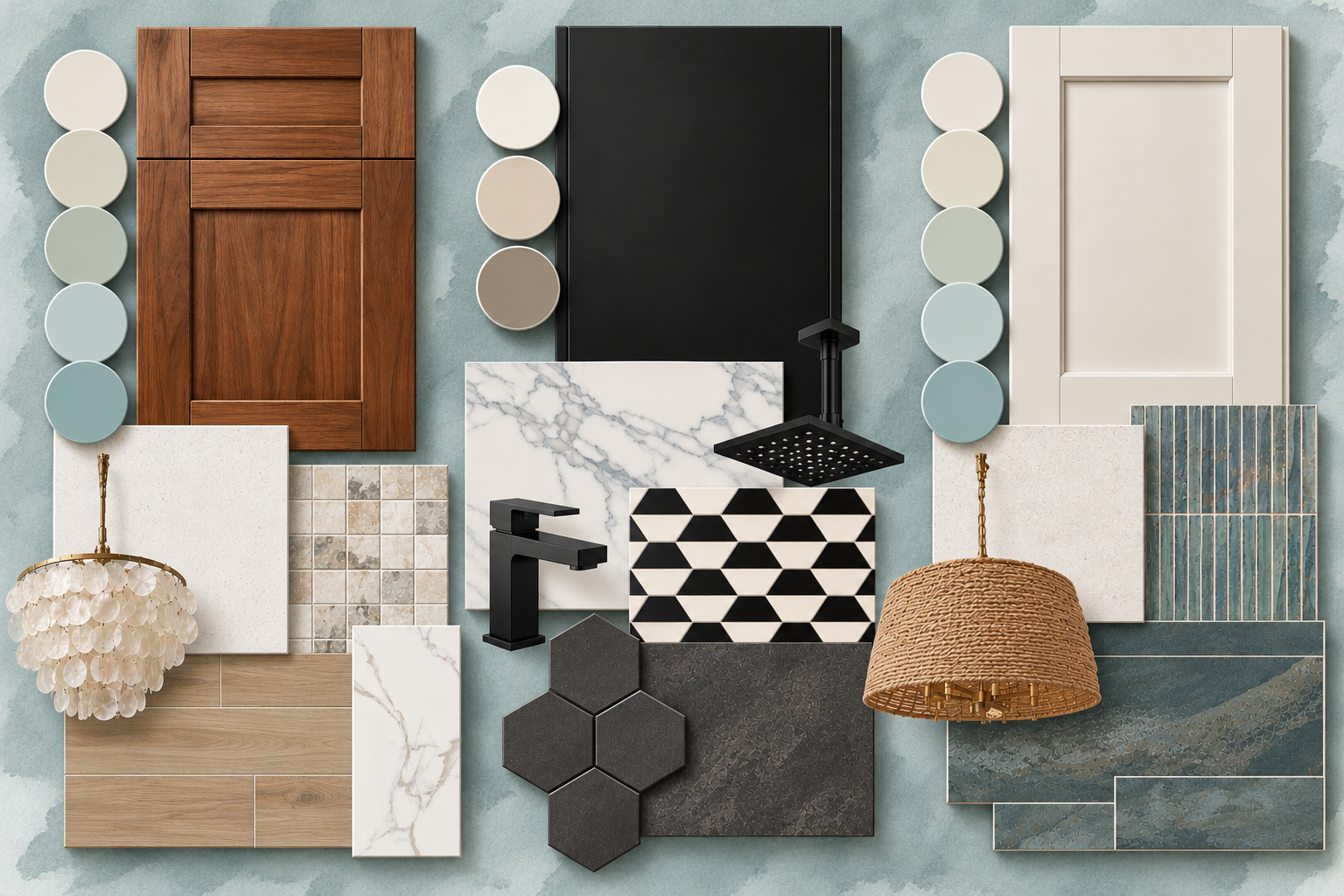
Combination of materials from various remodel projects by Diva by Design (image created with AI from actual project photos)
8. Review Everything Together Before Ordering
Before committing to your materials, look at the selections as a complete design. It’s one thing to admire a tile sample in a showroom or a cabinet color on a computer screen. It’s another to see how those materials relate to the flooring, countertops, paint, and fixtures you’ve chosen.
This final review is an opportunity to identify anything that feels disconnected before materials are ordered and installed. A beautiful remodel isn’t the result of choosing the most expensive materials or following every current trend. It’s the result of thoughtful decisions that work together.
You Don't Have to Make Every Decision Alone
Choosing remodeling materials can feel overwhelming because there are so many decisions, and each one can affect the next. However, when you approach those selections in a thoughtful order, the process becomes easier to understand.
Knowing the order is a good starting point. Knowing which materials will work together, how they’ll look in your home, and whether they’ll create the feeling you want requires a more experienced eye. That’s where professional design guidance can help.
At Diva by Design Interiors, my Finishes & Fixtures service helps homeowners make confident decisions about the materials and finishes that shape their remodeling projects. Rather than making selections one at a time and hoping everything works together, you’ll have professional guidance to create a balanced, intentional design that reflects your home and personal style.
Explore my Finishes & Fixtures design service to learn how I can help you bring your remodeling plans together.
At Diva by Design, I help homeowners throughout League City, Galveston, and the Houston area navigate material and finish selections for renovations and new construction.

Planning a DIY Remodel?
If you’re managing your own remodeling project, my Rock Your Remodel guide can help you organize your plans, understand the decisions ahead, and approach your project with greater confidence.
Get Rock Your Remodel and start planning your renovation with more clarity and less overwhelm.
A peaceful home isn’t created by accident. It’s designed with intention.